Re-booting India's counter-Maoist strategy
Tags
Conflict, Internal Security
By:
Yashovardhan Azad, Saika Datta
Tags
By:
Yashovardhan Azad, Saika Datta
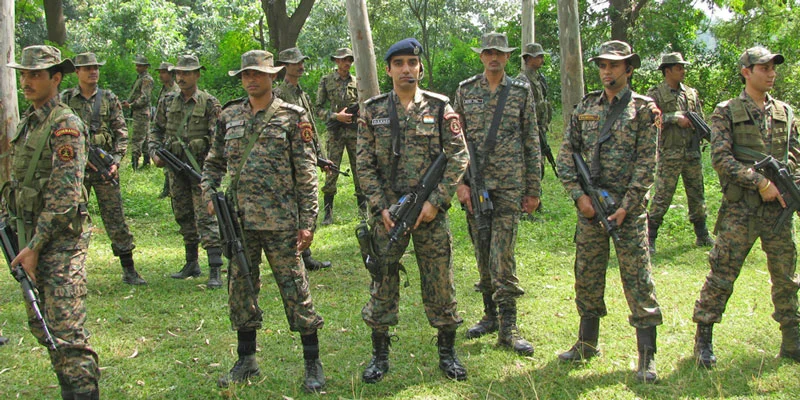
In a major setback, 22 policemen drawn from the Central Reserve Police Force (CRPF) were killed in an ambush, carried out by the Communist Party of India (Maoist), on April 4 along the border of districts Sukma and Bijapur, in the central state of Chhattisgarh. The CPI (Maoists) is a banned organization, leading an armed insurgency across a few states in India including parts of Chhattisgarh, Jharkhand, Maharashtra, Odisha and Bihar.
The attack and the continuing Maoist threat has raised several important questions. Does India have a successful strategy to deal with what former Prime Minister, Dr Manmohan Singh described as the single biggest internal security threat? Perhaps, the lack of strategy is also leading to a number of issues that ensures the Maoists continue to operate freely, while inflicting casualties on security forces.
This short paper attempts to understand the underlying reasons that led to this setback and explores the possible short and long-term solutions to tackling the Maoist insurgency. In particular, we examine the role of the CRPF and the state police forces and the possible short and long-term solutions to effectively combat Maoist insurgency.
The CRPF is a federal police force, whose primary role is to combat armed insurgencies and come to the aid of state governments across the country for maintenance of Law and order.
The state of Chhattisgarh, where this ambush took place, has been ruled by the Bharatiya Janta Party (BJP) as well as the Congress. A number of issues that are pertinent to the inability to successfully tackle the Maoist threat has seen neglect by all political parties, both, at the state and at the federal level.
We examine these issues and suggest short and long-term measures that can turn the proverbial tide.
The CRPF was part of a larger force that was launched by Police chiefs of Sukma and Bijapur in Chhattisgarh for a specific operation targeting multiple locations. The force included men from the CRPF, their elite COBRA unit, along with state police forces including the Special Task Force (STF) and the District Reserve Guard (DRG). In total eight teams left from Bijapur and two from Sukma. Reliable intelligence had revealed the presence of senior Maoist commander Hidma in the area.
Out of eight teams from Bijapur, two were launched on the night of April 2 and tasked to travel to Alipuda and Jonaguda villages. These are the ones that came under fire. From the accounts available of the injured personnel, it is clear that the Maoists were tracking the teams as soon as they were launched. The operation had the services of unmanned aerial vehicle (Heron), which had picked up Maoist movements. This is also borne out by the fact that the Maoists managed to lay an elaborate and unusually long ambush, ensuring that the CRPF teams remained in the kill zone and continued to be targeted as they tried to escape.
The teams passed the villages of Jhiragon and Teklagudem and found them empty, which should have alerted the team commanders. The miss proved to be fatal. A company of the CRPF is stationed about 4 km from the site of the ambush. However, reports indicate that several hours after the ambush, no reinforcements were sent from this camp to the site. In fact, the bodies lay through the night and the Maoists had ample time to take away the weapons of the fallen CRPF personnel as well as their own casualties.
A similar ambush took place in April 6, 2010,when 75 policemen from the CRPF and one from the Chhattisgarh Police were killed by the Maoists. At that time events leading to the ambush were quite similar. The CRPF was asked to go on an area domination patrol for 72 hours, which is against the norm. Usually, area domination patrols last several hours and are rotated by different teams to avoid any ambush. The force continued to roam around the jungles around the Tadmetla area before being ambushed. According to spot reports, the policemen failed to charge the ambush and were killed in bunches as they ran away from the ambush falling into a planned trap laid by the Maoists.
Usually, tactics for ambush and counter-ambush have to be imparted to security personnel, who have to be trained under realistic circumstances. However, this seems to be a major lacuna as more and more CRPF personnel are killed in ambushes carried out by the Maoists.
However, the lack of superior tactics cannot be dismissed off simply as a lack of training. There are other key factors that are also involved, which are examined in detail later.
The CRPF is primarily staffed by personnel directly recruited as constables or as officers. It also has a set of officers who are sent on deputation from the Indian Police Service (IPS). As per tradition, the force is always led by an officer from the IPS and its highest echelons, including key operational and staff positions are also manned by officers on deputation from the IPS.
However, as per existing policies for deputation of IPS officers to central police organisations (CPO) like the CRPF, only at the rank of DIGs. The minimum length of service for the IPS to be eligible for deputation at the rank of DIG is 14 years. This means, all IPS officers on deputation to a CPO will have never served at the Company or battalion level. This creates a major disconnect between the upper echelons of the CPO and the battalions that are deployed for counter-insurgency operations. The fact that IPS officers come in at the level of DIG also increases the age profile of the officer cadre, while CRPF cadre officers serve at company and battalion levels, but are unlikely to see promotions to higher ranks that are dominated by the IPS.
Unlike the Indian Army’s infantry units, the CRPF battalions lack cohesiveness. Companies from the same battalion could be deployed in different states, with the Commandant having notional control. It is left to company commanders and junior officers to man them under difficult circumstances. This lack of a cohesive command and control in the battalions prove detrimental to the operational capabilities of the battalions.
Most CRPF counter insurgency operations are carried out in close coordination with the local police force. This means that the concerned Superintendent of Police (SP), in charge of the Districts are the main authorities responsible for these operations. While many districts are manned by young IPS officers, many are also manned by officers drawn from the state police force. They are usually older, around 40+ years of age.
The chain of command among the CPOs is also left unclear, and when officers become casualties, the ability of the junior leadership to marshal the troops and launch a counter-offensive is limited.
When united Andhra Pradesh created the Greyhounds, it established a clear line of command. If an officer fell during an operation, a clear chain of command ensured that there were leaders who would replace him. In the case of the CRPF, it was found that when key leaders were neutralized, the lack of a clear chain of command led to confusion among the troops, adversely affecting their morale and fighting capabilities.
A key to combating an armed insurgency is a thorough understanding of the opponent. This means not only studying their fighting tactics, but also their leadership, their ideologues and the motivations of the men and women who sign up as cadres. While states have been attempting to understand the Maoists for decades, there is a severe dearth of institutional knowledge about the Maoists.
As a case in point, a study of interrogation reports of captured and surrendered Maoists in Chhattisgarh, carried out by one of the authors of this paper in 2010, reveals interesting insights. On many occasions, the Maoist cadres are drawn from the local tribal population that dominate parts of Chhattisgarh, Jharkhand, Bihar, Odisha and Maharashtra.
The socio-economic data from these intelligence reports also suggested that many join the CPI (Maoist) early. This is largely due to the absence of the government machinery in the interior parts of the state. According to several intelligence reports, it is now clear that the top leadership of the Maoists came from neighbouring states like Andhra Pradesh and Telangana. Many orphans who get inducted into groups known as Bal Dalams, are also groomed for leadership roles methodically.
However, there is a marked distinction between the upper and the middle leadership in the Maoist cadres. While the upper echelons continue to be from outside the state or non-tribal, the middle leadership is now nearly all tribal, with deep local roots in the area. While they are not as ideologically driven as those from outside the state, they are deeply committed to their cause. While some attribute the continuing recruitment of the local tribal population into Maoist cadres to the lack of development parameters, there are studies that show that the distinct tribal identity, combined with absence of the government machinery, leads to greater recruitment for the Maoists.
Understanding this distinct tribal identity and its social hierarchies is a key element for a long-term solution that can wean away them away from Maoist ranks. This will need a multi-disciplinary approach that is sensitive to the ethos and history of the local population, their rights and identity, while combining it with the development measures that is sensitive to their needs.
There is also a preponderance of governments to target Maoist sympathisers and ideologues. However, while this may serve as a political tool, this does little to address the key issues that leads to greater recruitment from the tribal belts of states like Chhattisgarh, Andhra Pradesh, Jharkhand, Odisha and Bihar. A long-term solution needs better focus and understanding of the root causes that produces a fertile ground for new recruits and positions an effective counter strategy.
Reforming the CRPF
Any attempt to address the leadership crisis in the CRPF also needs a more comprehensive reform of the organisation. Its personnel policies need to be designed keeping in mind a younger age-profile of its constabulary and officer cadre. A younger profile also leads to better training and preparation for deployment in CI operations.
A case in point is the attempt to create a Bastariya Battalion of the CRPF, which was designed to draw recruits from the local, dominant tribal population in the Bastar region of Chhattisgarh.
The key to reforming the CRPF as a modern and effective counter insurgency force is to enable them to develop abilities to generate local and actionable intelligence and carry out small team operations. While the COBRA battalions were raised as a special force, however, it has not been able to develop its ability to carry out small team operations or work with the local populace.
Currently, CRPF battalions are also spread too thin, with companies in far-flung areas. For instance, two battalions are stationed in the state of Uttar Pradesh specifically for anti-Maoist operations, even though there is no known Maoist activity in the state. Similarly, the force is heavily deployed in the state of Jammu and Kashmir, which has a very different kind of armed insurgency and there is no area-specific training that is imparted to the force and the personnel before being deployed in the area.
An ideal force to emulate are the Greyhounds, a special police force, that was raised by the state of Andhra Pradesh in 1989 to tackle the growing Maoist threat. It established a very successful legacy of carrying out intelligence-based operations leading to the shift of the cadre and the leadership to neighbouring states like Chhattisgarh. The Greyhounds based their success on their ability to generate local and actionable intelligence, react quickly, carry out deep penetration strikes and undertake small team operations for long periods by lining off-the-land and pursuing Maoist cadres deep into their strongholds.
Small team operations also hinge upon the ability of the teams to communicate with their headquarters and quickly pass on actionable intelligence. However, this has not been achieved by the CRPF or the state police forces and the Greyhounds remain a unique organisation whose success has not been replicated in states like Chhattisgarh or at the federal level by the CRPF.
A key to training federal and state forces is the establishment of an effective doctrine that draws on the experience and institutional memory of successful counter insurgency campaigns. For instance, the US Army’s Field Manual (FM 3-24) drew heavily on the French success of its counter-insurgency operations in Algiers and then added its own lessons in operations. The doctrine is continuously updated and refreshed to ensure a basic standard for its counter insurgency operations across the globe. Indian security forces face major doctrinal challenges leading to disjointed training and operational outcomes.
A persistent issue that has dogged counter-insurgency operations against the Maoists is the lack of adequate air power for a variety of tasks. Chhattisgarh hosts a drone fleet that is used for surveillance and tracking of insurgent movements. However, it has worked sub-optimally and did not serve the interests of the counter-insurgency troops.
Air power can also be deployed effectively for rapid insertion of troops or evacuation in situations similar to the ambush on April 4 that led to the death of 22 CRPF policemen. Armed helicopter gunships could can play a decisive role in dealing with Maoist threats in the jungle, but need to be judiciously used to prevent any collateral damage to the civilian population.
A key to successfully managing the Maoist threat is to also ensure better intelligence by infiltrating Maoist ranks. This is easier said than done and needs major reforms at the state and federal levels such as the local police intelligence, the subsidiary intelligence bureau and the Intelligence Bureau. Creating human assets is a time-consuming affair and needs a long-term gestation period to deliver successful results. According to available reports, the ambush of the CRPF on April 4 was preceded by two sets of intelligence inputs that suggested that a large Maoist presence was in the area. However, the inputs were not specific or actionable for the troops to react.
Better intelligence also needs developing relationships with the local population. There is also a distinct lack of coordination on sharing intelligence and databases between the states that are contiguous as well as with the federal agencies. Unless these issues of coordination are addressed, troops deployed for counter insurgency operations will continue to bear the brunt of casualties at the hands of the Maoists.
Finally, the federal government and the Maoist-affected states need to work together to build a comprehensive strategy against the Maoist threat. This means building all-party political consensus to ensure there is a political will to deal with the crisis. States also need to build time-bound end goals for ending the Maoist threat, while keeping the best interests of the local population in mind.
A key to this overall strategy has to be socio-economic and political, while judiciously using security forces. States need to work together, create institutional mechanisms to share intelligence and information, while building the capability to operate together against a common adversary.
In an interview to The Quint, the current Chief Minister of Chhattisgarh, Bhupesh Baghel highlighted a number of issues that led to the massacre on April 3. He blamed the lack of roads and the topography for the inability of the security forces to react quickly.
However, this shows how little progress has been made building roads in the interiors for over a decade, even though the Maoist threat has continued to thrive in the jungles of Chhattisgarh. The forest is dense and the occupation is scarce. It becomes difficult to catch them (Maoists) or surround them. They are at a place where there are no roads or electricity or connectivity. In such situations, the jawans (constables) travel for miles for an operation on foot. This is the first time we are going into their nests and carrying out attacks,” Baghel told The Quint.
Clearly, the Chief Minister’s interview makes it clear that the states have the capacity to take on the Maoists, and barely work together to combat them. This lack of a joint strategy will only end up perpetuating this conflict, while piling up casualties.
Logistics, the lines of communication and the ability to deploy and maintain the presence of government functionaries will have to be the key to a successful counter strategy to the Maoists. So far state governments have failed to work with each other and the federal government to build a comprehensive strategy. In fact, it is often stated that the lack of a comprehensive strategy is the only strategy currently in place to deal with the Maoist threat.
There is an urgent need to build a comprehensive counter-Maoist strategy that involves the key Maoist-affected states and the federal government. This must have clear and common outcomes agreed upon with timelines for effective implementation. This means also building institutional mechanisms to share intelligence in a timely fashion, have joint operational capabilities of the police along their contiguous borders, while also working together at the political level.
The strategy to wean off the local population to be recruited as cadres for the Maoists has to be reworked regularly, looking at local factors such as tribal identities, their local resources, the ability of the local government to deliver development.
The Maoist-prone areas will need better lines of communications and better road networks. The ₹ 11,000 crore project meant to link 44 Maoist-affected districts through 5411 km roads has to be sped up considerably as most of it is in Chhattisgarh.
Leadership issues in forces meant for counter-insurgency operations at the federal and state level need to resolved. The focus should be on developing a younger age profile of the constabulary and the officer cadre, with special training to carry out small-team and deep penetration operations. There should be a well-laid out criteria for appointing leaders in operational roles of all security forces, be it the CRPF or the state police force. This must include experience and training of the officers under consideration before they are appointed to counter-insurgency roles.
The deputation of the IPS to Central Police Organisations should be aimed at commandant ranks to ensure they have experience in counter-insurgency operations at the company and battalion levels. Only officers who have served at the company and battalion levels should be posted to the higher echelons of the CRPF to ensure continuity and consistency in counter insurgency operations.
Training of the state and police forces have to be carried out to build small-team and deep penetration operations on the lines of the Greyhounds. Training also needs to be balanced with deployment schedules to ensure adequate time for rest and training to ensure the forces operating on the ground are at their peak performance. A clear chain of command should be apparent with even small-sized teams undertaking operations.
States with contiguous borders where Maoists operate need to improve their coordination and deployment of forces. The lack of coordination also leads to jurisdictional and operational issues that work to the advantage of the Maoists while limiting the effectiveness of the counter-insurgency forces.
The key to better counter insurgency operations will be the improvement in generating intelligence and optimum use of air power. The reluctance to use helicopter gunships and air back up for operations is leading to unnecessary loss of precious lives. Currently, these are major areas of concern.
States also need to establish common databases and carry out multi-disciplinary studies to counter Maoists. They need take a comprehensive look at socio-economic factors that lead to higher recruitment by the Maoists from the local populace. Once an area is secured, the development works cannot be allowed to languish at a tardy pace.
India needs a comprehensive doctrine that helps build institutional strategy and memory to combat armed insurgencies. Currently, forces deployed in counter-insurgency operations lack a common doctrine, methods and goals and tend to work at cross purpose. The development of comprehensive doctrine will enable all forces to build a minimum standard of expertise and performance, vastly reducing casualties and increasing their effectiveness against armed insurgent groups.
Rationalisation of forces to be used for combating Maoists is imperative. Though CRPF is the nodal agency, other CPOs are also used in the states for anti-Maoist campaigns. It would be in order to used only the CRPF which is specialized for this task.
The regimental ethos of the CRPF should be kept intact. The battalion cannot be dispersed in a manner where different companies are performing varied nature of assignment at different places far from each other.
Quarterly meeting of Home ministers and DGPs of affected states along with the key CRPF Officers is a must for stock taking, future planning and ironing out the differences/gaps in operations as also maintaining a sustained push for development in targeted areas.